Showing posts with label by Sue and Marie. Show all posts

Monday, August 1, 2011

Being A Dive Instructor


This has to be the most satisfying job for many reasons, but it´s not all glamour and wild parties no matter what you might have heard. 
We have just finished an instructor development course (IDC) here on the west coast of Mexico and the excited new instructors are traveling to far flung places in search of getting jobs as instructors. These flights have to be paid for out of their own pocket, which is fine, but often you arrive at the destination, ready to start working, only to find someone else got to the job! Some are flying to the other side of the world hoping to find employment wherever they land. This is a risky thing to do, but it often pays off if your homework is done ahead of time. Arriving somewhere in low season or rainy season is not the best thing to do. 
There are always jobs to be found, even in a recession, divers will always find the money necessary to fulfil the need to dive. Crazy, but true! PADI (Professional Association of Diving Instructors) had their most successful year during the recession in the early 2000´s, and it doesn´t seem to be any different now. Looking forward to the freedom, a round of golf, a ski down the black run or diving in the ocean, gives you release and motivation. What life is all about!!


I had it fairly easy when I started off as I was offered a job teaching at the college I trained at. Little did I know I would be working 6 and a half days a week doing 16 hours days, but I sure did learn my trade. Through this job, we were offered a job in Borneo with a $200 bonus if we could get there within the week! What a bonus when the flights cost $800 each. This was a new company, so we had nothing to do when we arrived, therefore earned nothing for the first, 3 months until our marketing paid off and we became busy. Here again, we worked 6 days a week and dived 3 or 4 times a day, but this was fun as the diving terrific . Living on a tiny island with a poor diet and no electricity makes you crave civilisation, but thankfully we had great guests who made our evenings fun. I swear if I hear someone playing Beatles medleys badly on a guitar again I will, well, swear! It was all helped by us managing to smuggle in some local rum to ease the guitar pain. Maybe I should have done some research about living on a dry island.
A lot of instructors teach all day, and then take their guests out in the evening, which is tough. Getting up at 6am with a hangover to haul tanks is not a lot of fun. But, we all do it for the buzz of teaching guests to dive, showing them the wonders of the ocean and sharing our passion. 
We are in a nice position now though, setting up our own business, so if it all works as planned, we will employ staff to work with us, and take life a little easier. 

Friday, July 22, 2011

The Bay Today


This ocean is beautiful at the moment, it´s got everything we have patiently been waiting for over the past 6 months. Clear, warm water that is full of some of the most fantastic creatures.
The visibility is amazing in most places. This is a term we use to guess the distance we can clearly see into the distance. Last week, off the beach at Mismaloya, I could see for 100 feet! Crazy good. I can clearly see my divers and they can clearly see everything I am pointing out. The same story was to be told at Majahuitas and good old Los Arcos has 70 foot plus. It also means that all you snorkelers can now see all the fish too.
Los Arcos has had many sightings of dolphins over the past few weeks, and the manta´s are out and about. Dolphins are enjoyed by everyone and are fairly common while the manta´s are not seen so often, so are a special sight for people to watch. The two words I use to describe them are charismatic and mega. Where ever you are diving in the world, swimming with a manta makes it a great dive. They are graceful creatures who fly around the ocean at great speed using seemingly little effort. Manta’s are totally harmless and often enjoy swimming amongst people. If you get lucky, you can see them leaping out of the water, and that really is a sight to behold.
Manta rays are huge creatures and can have wingspans of 30 feet, but the average span is about 20 feet and they can weigh up to 3,000lbs. When they get to around 14 feet in wingspan, they are ready to breed. They give birth to live young, who are themselves not small, being around 4 feet in span and weighing in at 20 – 30lbs! Fortunately for mum, they only give birth to one or two at a time.
There is still a lot of research to be done on manta´s and many facts to find out. This is not an easy job as they are near impossible to keep in aquariums to study as they are so big. Only 4 are held captive in the world at the moment.
Something else we have seen this week is a sea otter. I didn´t know they made it this far down, as they like cold water, but this little fella did. We were with some friends at Burros, where the guys were surfing and I was falling in the ocean a lot. I didn´t mind though as I got to spend more time in the water with this little sea otter, who was with us for a couple of hours, playing and enjoying some company. He seemed to be all alone as we didn´t see another one there all afternoon. I had never seen one before, but hope they have decided to relocate as they are so cute and playful.

Monday, July 11, 2011

Wreck Diving


Scuba diving is about a lot more than looking at fish. Wreck diving is a specialized type of scuba diving that involves diving on shipwrecks and (sometimes) looking for sunken treasure. We do have shipwrecks in the ocean here, but unfortunately they are too deep for recreational divers to go and see. This is a shame as diving on shipwrecks is really interesting and wrecks, like reefs attract many fish, who make it there “home”. Coral grows on them quickly, making them a colourful sight.

In the 1940’s, a ship sank next to Los Arcos. The ship, rumour had it, was a bit special. It has doors of gold! The ship sunk in 500 feet of water, and it was impossible that someone (with the equipment they had at that time) could go that deep.
As with all mysterious treasure, there was a guardian: a gigantic grouper fish with eyes as large as a plate. The best divers tried to dive down to remove the valuable doors, but they failed to return with the booty. Some returned frightened, alleging that the fish was the size of a small boat while others simply did not return.
It is possible then, that the ship with its golden doors, is still there. And of course, the grouper?
There must be many undiscovered shipwrecks out there containing treasures, and who is to say, you can´t find it?
When you hear divers talking about shipwrecks, the term penetration pops up a lot! This has nothing to do with the 60ft club, scuba diving’s equivalent of the mile high club. (I know of no one who has done this though, just another fun myth,). Penetration, however, is the term used to describe entering a shipwreck. This requires special training as it can be dangerous. Lines are used to map the route in, and hopefully, out. As silt collects inside wrecks, it only takes a misplaced fin kick to cloud the water, concealing the exit route. Without specialised training, overhead environments should not be entered, ever, but with the training, they are a lot of fun. Swimming around a ship’s deck, going up ladders, checking out cannons and seeing who is hiding in there, is amazing.
I have dived on many wrecks, but one of my favourite sites was in the Red Sea in Egypt. When the Israel´s pulled out of Egypt, they did not want to take all of their equipment with them, so they dumped it off a cliff into the ocean, along with many empty oil drums. This site is spectacular now. The empty oil drums contain many surprises, from eels to nudibranches (the pretty slugs), amongst many other surprises. You can also sit in the jeeps, perch on the tank guns and check the periscopes out. It is a playground with history attached.
Back to Vallarta though, there are some lovely little wrecks along the coastline that have a lot of life living in and around them, and are fun to explore. You can never stop trying to guess how it came to be sitting on the bottom of the ocean, and wishing they were full of gold.

Wednesday, July 6, 2011

Instructor


I first started diving 10 years ago. I was a reluctant student, but as we were going to the Red Sea in Egypt, I thought I should learn to dive as I am not great at lounging around poolside all day. So, I signed up for a course in England where I completed the pool skills, studied and passed my exam. I was then issued with a piece of paper to take on vacation with me. This meant I didn´t have to do the required 4 open water dives in England, but in the warm, clear waters of the Red Sea.
Once I had completed these open water dives, I was a certified open water diver and the oceans were mine to play in. I wanted to dive more on this holiday, so went to sign up for a few more days of diving, only to find it was $20 more to take the advanced course. It seemed silly not to. This meant I could dive on the wrecks out there, do a night dive and go down to 100ft. I also did a navigation dive and a peak performance buoyancy dive. These all increased my confidence and ability in the water, and that is where I developed my buzz for diving.
After diving on every holiday after that one, we returned 3 years later and took our rescue diver course. This course teaches how to find missing divers, how to bring unconscious divers to the surface and how to resuscitate them, amongst lots of other useful skills. Carrying adults up the beach in 120° heat was hard work. Most of the tourists on the beach were blissfully unaware of the fact we were practicing, and gave us a huge round of applauds every time someone “magically” came back to life
We returned to England after this with a 6 year game plan on escaping the rat race and diving for the rest of our days.
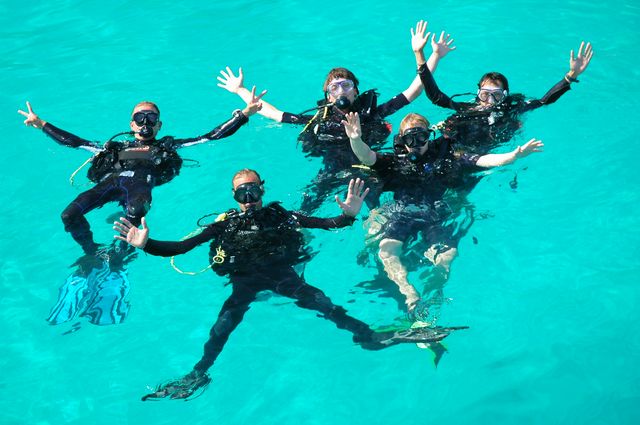
6 years later, we arrived in Manzanillo to start our dive master and instructor training. Dive masters, generally speaking, guide divers, keep them safe and have too much fun. Instructors teach divers how to dive. Both have their own responsibilities and should work together hand in hand.
Following our instructor training, we were thrown into the deep end of the pool and were employed as managers of the college we attended, dealing with the complete running on the college, as well as teaching the students. Although this was a great learning experience for us, it was hard work, if one can call diving work.
We took the next step up the training ladder and became master scuba diver trainers, which means teaching lots of specialty courses. More training followed as we began teaching in the instructor development courses, which are taught by course directors (the top of the PADI tree) and became staff instructors.
After 2 years at the college, we needed a change, and went to teach on a small island off the coast of Borneo in Malaysia. We had an amazing time there living with the chief of the village and his family and diving every day. Sounds ideal, but after a year, we needed some creature comforts, like electricity, hot water and some good food.
There was also that small need to own our own dive business too. PV really did seem to be the only place to do this, so here we are. It´s taking it´s time, but we are getting there, and there is always manaña.

Saturday, June 25, 2011

Take Photo´s, Leave Bubbles


I have seen some awful diving practices this week that have stimulated me into writing this article regarding interaction with our underwater environment . So, here it goes.
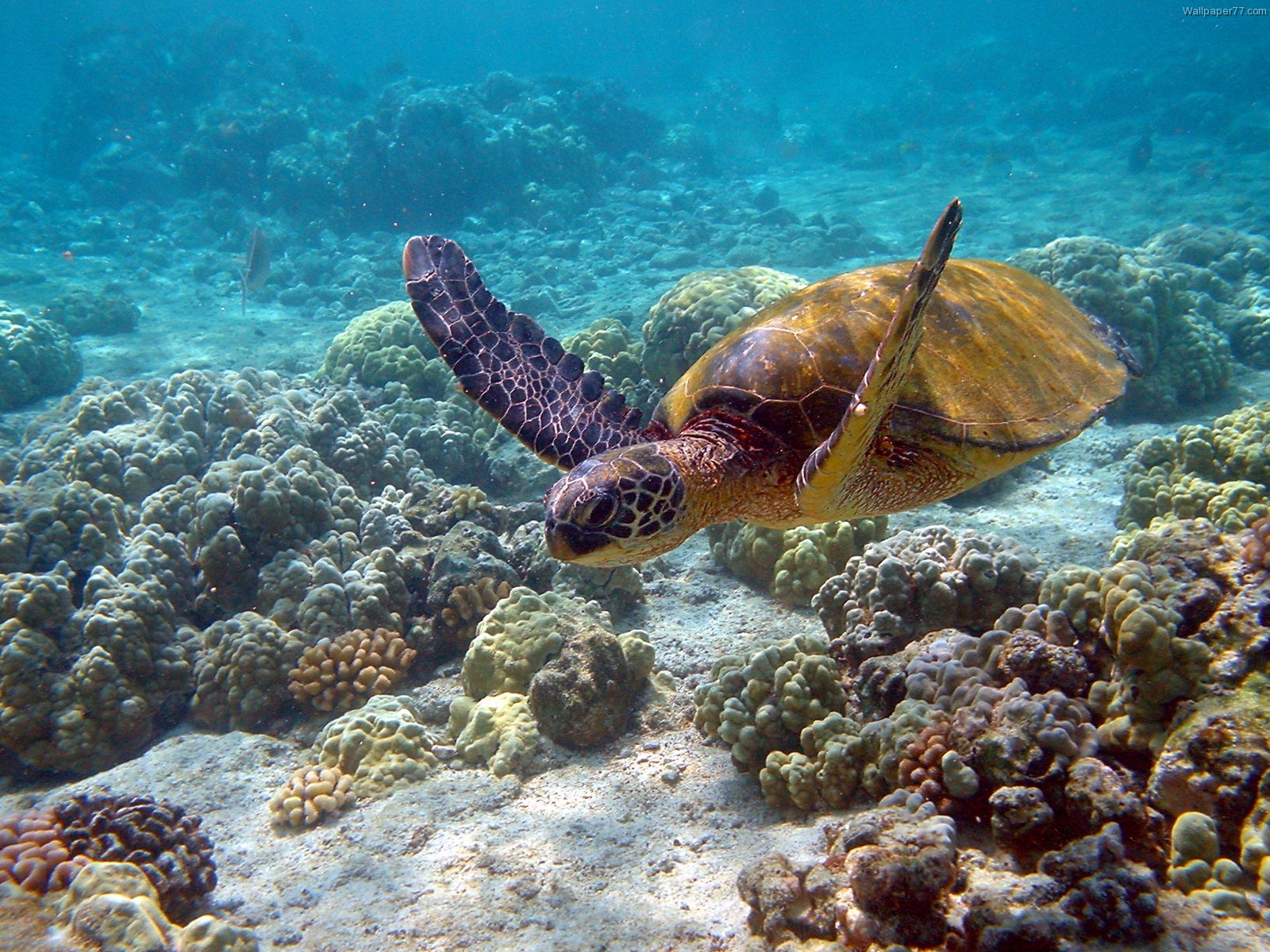
We have many turtles cruising around our shores due to them returning to lay eggs year after year. This is a great plus for the area as everyone loves turtles, but they really should not be used as sea scooters! They are really gentle creatures and we all love to see them in their own environment, but seeing is all we should do. They get really stressed when they are touched or moved about against their will, and they really don´t enjoy it. Watching is enough of a buzz.
Jump into the ocean here and you will be sure to see a pufferfish of some description. They are everywhere, and the most common are the porcupine puffers. They have big eyes and sweet faces, but have small pectoral fins, so are not good swimmers. When stressed or threatened they have the ability to gulp large quantities of water, and when fully puffed their spines stick out. This makes it hard for their predators to swallow them and explains their name. This amazing marine defense is also their downfall as inconsiderate divers puff up these fish for their own amusement!! Why, in my eyes this is animal cruelty, and do these people know that the neurotoxins in their spines are at least 1200 times more potent than cyanide!
Another little creature I see being molested is the flower urchin. I first saw this practice a few year ago when I lived in Manzanillo. These little creatures spend all their time collecting debris to decorate themselves with. They have little flowers all over them and suckers on their bellies, with venomous pincers which can inject you with their poison.
They can, and have, killed divers. I have seen many dive guides popping this apparently “harmless” creature on the palm of their hands, and then turning their hands over, showing the flower urchin stuck tight. That must be really thrilling to watch!!
Gloves? I find them the most environmentally harmful piece of equipment you can use as a diver. Gloves give divers the luxury of being able to grab onto that piece of coral to take the photo, or stay still and watch something. Usually, that something that is being held onto is living and will now soon be dead. Most of the things that could harm you in the ocean are really small and very well camouflaged. They are also the creatures that are great to observe, so why kill them for the sake of a photo or a glimpse? If you don´t touch them, you will be perfectly safe. We finally received our equipment this week, and gloves were not included. So, we apologize if your hands get cold in the winter, but I find shoving your hands up your armpits does the job just as well.
Spear guns. I say “Give the fish a gun and see who is the toughest”. End of.
Diving is a great pastime, and does not need to affect the environment, so let´s not........please.

Monday, June 20, 2011

Stingray


Hurricane season started this week with the arrival of hurricane Adrian off the west coast of México, disrupting diving. How very inconvenient of it. Thankfully, it passed without causing any land damage, but created some dangerous surf and rip currents. Hurricane season is upon us until the end of November, and we need to keep an eye on them when it comes to diving.
I learned a really useless piece of information while looking into hurricane Adrian, Hurricanes are named alphabetically and alternate between male and female names. I love useless facts like this. Anyway, to stay safe, check the weather forecast before organizing your diving or snorkelling outing.
Along with the 1st hurricane, we encountered our 1st rains of the year. Mother Nature never rains but she pours! This sometimes has an adverse effect on the water conditions, but not all the time! Often, when we have had a night of heavy rain, the water is murky along the coastline due to the rain washing silt, and everything else from the mountains and streets into the ocean. I did say not all the time though. I have been diving after heavy rainfall. After informing the divers that the visibility will be poor, we jump in only to find 100 foot visibility. Mother Nature makes the rules and they are not always logical.
So, after having a few days on being a land lubber, I took our boat to Chimo. Logically, I was thinking I may have 10 foot of clear water in front of my mask. Wrong. Crystal clear blue waters welcomed me with open arms as I dropped into the hot water, and boy is the water getting warm.
Now we need it refreshing, it´s not. So, as sods law would have it, I had a short wetsuit on, we dropped down to 60 foot to find some nice cool water and to remember what it is like to shiver. We had only been down for 5 minutes when directly above our heads, a manta ray appeared. I think I let out a schoolgirl squeal as I had never seen one while diving before. It´s wings spanned one and a half metres across, so a baby compared to some, but majestic nonetheless.
It stayed within sight for less than a minute before gracefully flicking a tip of its wings and flying off. I was going as fast as I could and it was barely moving its wings. There was nothing else to do after we surfaced but exchange high fives, big grins all around.
If this crazy weather is going to deliver these quality days though, bring it on. This has to be a good omen, and I am hoping that I will finally see my 1st whale shark soon.


Saturday, June 4, 2011

Coral Reefs

As well as observing fish when we go snorkelling and diving, the coral reefs in which they live are just as stunning and a vital part of ocean life. Known as the “rainforests of the sea”, coral reefs are the greatest expression of ocean life and the largest living structure on the planet. Coral reefs are the most diverse and beautiful of all marine habitats.
What is a coral reef? Coral reefs are like underwater cities built from living animals (coral polyps) which usually live together in colonies. Hard corals, which are the only types of corals to form coral reefs, produce limestone skeletons. Amazingly, they do this with the help of tiny microscopic plants that actually live inside them. These plants give the corals their colours and capture energy from the sun by photosynthesis - just like plants in your garden!
Although they cover only 0.2 percent of the ocean environment, they are home to 25 - 30 percent of all fish species and are a home for oysters, sea urchins, sea anemones, jellyfish, crabs, shrimp, sponges, lobsters, octopus, clams and sea turtles, amongst many others.
Over 3,000 species can live on one reef.
Coral reefs worldwide are under intense pressure. The continued development of coastal regions has caused silt water to run into the seas, smothering these delicate systems, and, coupled with the damage caused by destructive fishing methods, it is thought that up to 90 percent of reefs have been impacted by humankind.
There is also evidence that rising water temperatures are causing a phenomenon known as bleaching, which is fatal to reefs. Coral reefs only thrive in warm, clear water with few nutrients (which is why water pollution kills corals) so they generally only grow in the subtropics and tropics.
There are three major types of coral reefs that exist, firstly fringing reefs they are directly attached to a shore and are the most common kind of reefs found in the Caribbean.
Secondly barrier reefs that run parallel to the shore line, like the Mesoamerican Barrier Reef along the east coast of Mexico.
Lastly there are atolls which are a roughly circular reef surrounding a lagoon. Some of these coral reefs that are present today have been alive for over 50 million years.
Diving a reef can be the highlight of a diver’s life, but we have a huge responsibility when exploring reefs not to harm or disrupt them in any way. A considerate approach is vital if we are to preserve these wonderfully vibrant ecosystems. Why?
Well, coral reefs protect coastal dwellings, agricultural land and beaches by forming natural barriers along the shorelines of the sea. Parts of Florida would have been under water if coral reefs would have not existed. Less known, coral reefs are widely used in the treatment of cancer, HIV, cardiovascular diseases and ulcers. Porous limestone skeletons of the corals have been used in grafting human bones. If you cut yourself on coral and don´t clean it properly, it can grow inside your skin!
There are many different types of corals, and most of them have self descriptive names, just as fish do. Fan coral, brain coral, staghorn coral and table coral to name but a few.

Saturday, May 28, 2011

Happy Snapping

We’ve been writing for the Tribune for a while now, and thought it would be a good time to write about something that would interest scuba divers, photographers and videographers, so pretty much all of us. It’s been years since anybody has taken photos with a film camera. Technology has moved on so much that we can now view a photo immediately and decide if we want to keep it or not. Most land cameras can have a case made for them called a ‘housing’ so you can use them underwater.

My camera needs a waterproof housing, but some of the newer models you can use in the pool and take snorkelling without any protection at all!!! I’ve taught skills to children in the pool with their parents filming, giving them a great memory of that first underwater breath. Probably the equivalent of my parents filming me bathing in a plastic tub with a rubber duck, except the quality now is better than just different shades of yellow!! Those cameras are fantastic fun but only to about 5m, and they don’t have a white balance function which is crucial to taking great underwater photos.

So, what is white balance? Every reader of this article should have a white balance function on their cameras, but what is it for? Well, as we descend into the ocean, we lose colour.

The suns ray is distracted and the water absorbs colour. By taking a white slate down on our dive, we can point our camera at it and set the ‘white balance’ at each depth. This way, our photos don’t look blue/green as the camera is clever enough to adjust its colours in conjunction to the light that depth. I actually don’t like to carry too much with me when I dive, so I just roll the leg of my wetsuit or shorts up and use my thigh instead of a white slate. My thighs rarely see the sun, so it works perfectly! An alternative especially for close up still shots is to use a strobe or high powered flash. Ideal for nudibranches and seahorses, just turn off the white balance and let the artificial light do the work for you.

The key to taking great photo’s are good buoyancy skills and an understanding of your camera. When I get a new camera, I practice taking photo’s on land 1st, ensuring I know where all the settings are and how to use them. Once you have your camera mastered on land you are ready to go diving with it.

Underwater cameras vary in price from $200 to whatever you want to spend. I have a small digital camera, as like I said, I don’t like diving with a ton of equipment and it is great. Used correctly, you can get some great quality photos and videos from them.
There are disposable cameras for use underwater, but these do not have white balance on them, but any memory of your dive is better than none.

A friend of mine who loves gadgets came diving with us last year in a mask camera! It looked like a James Bond accessory with 2 lights on each side of his head and a something in the middle that looked like a gun sight. It also took video’s, but the quality was poor as the white balance couldn’t be set. The boy was happy with his toy though and that was all that mattered.

Saturday, May 21, 2011

FROGFISH

Over the past few months of diving, I have seen frogfish on 3 different sites in Puerto Vallarta. At Los Arcos, Islas Marietas and at Majahuita. Frogfish? Yes, it´s a cross between a frog and a fish! Yuck? No, they are so sweet and funny to watch and another wonder of the underwater world.

They are the masters of camouflage and an amazing example or how evolution can mould a species to survive in a given circumstance. The journey of marine creatures from egg to juvenile is not an easy ride, so it pays to have some tricks under your fins. This is where the frogfish champions.

Their camouflage is the key to their survival as they have to other weapons. No scales, no shell and no poison. Unlike most fish, they are not streamlined, but rather squat in shape, and they are not the best swimmers. They walk, or rather hobble around the coral or ocean bed on their frog like feet or move around by jet propulsion, sucking in water through their giant mouths and shooting it out of the gills on their legs. It is an ungainly sight to see, but mesmerising nonetheless. Their camouflage is so good they can hide themselves from other frogfish, which is useful, as they are cannibals!

Frogfish are also called Anglerfish for a good reason. They are great little fishers. They have a “fishing rod” on top of their heads with different lures (known as the esca) on the end of the “lines”. Some resemble worms and others look like nice little snacks. They wave them around to attract the attention of other fish. Once the fish gets close enough, they open their huge mouths so quickly (6/1,000 of a second, the fastest gape and suck of any fish in the world) it´s difficult to see what happened. As they have no teeth, they suck the fish in whole and digest within, no matter if the fish is bigger than itself! They are anything from 1 inch to 20 inches in length.

They can also change their colour and texture to match their surrounding perfectly, making them difficult to find. Once spotted though, you can often find them again as I have know some not move for 5 months. They are an underwater photographers dream as, not only are they stunningly beautiful, they pose motionless. They have “Muppet” like faces with downturned mouths, which doesn´t sound great, but coupled with the colours and textures, it makes them a divers favourite. The hairy frogfish is one of the strangest creatures I have ever seen. It is important not to disturb them or this will leave them open to prey.

Divers and underwater photographers will travel to the far ends of the oceans to see these creatures, so let´s hope they are settled and blossoming in the bay.

Monday, May 16, 2011

Afraid of Sharks?


I am going to try and dispel some myths surrounding scuba diving I have heard over the past few months.

The most popular reason I hear for not taking up diving is the fear of being eaten by a shark. Well, don´t believe what you see in Hollywood movies. Sharks are generally harmless and are non-aggressive. In fact, they are intimidated by divers and often flee when they see divers and the bubbles created by their equipment. Sharks generally attack when they feel threatened, so as long as you keep your distance there really is nothing to worry about. They really don´t like the taste of humans but rather much prefer eating fish. Seeing sharks in their natural environment is a rare and special site. We need to protect these wonderful creatures for the future.

Another reason I often hear is it´s way too expensive. It costs no more than most sports do, and remember that once you get certified, you’ll get an unlimited pass to the amazing underwater world. The total cost of getting a certification which will allow you to dive anywhere in the world is $400USD. After this, you can either rent all of the equipment you need or buy your own set, which will cost around $800. This way, you can dive off the beach anywhere in the world for free with no annual membership fees. The certification never expires either.

So, you have to be an athlete to be able to dive? Not really. You need to be able to swim, but not like Ian Thorpe. Comfort in water is the most important factor in diving. There are few disabilities that exclude you. You can only imagine the joy and freedom diving gives to disabled people. It really is a sport that most of us can do from the age of 10 onwards.

So, scuba diving is a dangerous sport? Diving can be dangerous if safety precautions are not followed. Like any other sport, diving needs training so you can understand the dangers and prevent them from happening. Furthermore, modern dive equipment makes scuba diving one of the safest sports you can do. More people die from 10 pin bowling per year and from coconuts falling on their heads!

“I am claustrophobic”. Well, claustrophobic people actually find scuba diving an enjoyable sport. With the openness of the ocean, clear water, and the fantastic marine life, they are able to overcome their fears and realize that it’s such a liberating experience.

So, there really are no valid reasons to avoid diving, unless of course, you only have a head! It is a safe and sexy sport that is a ton of fun for all of the family.